How to Write a Cafe Business Plan That Works

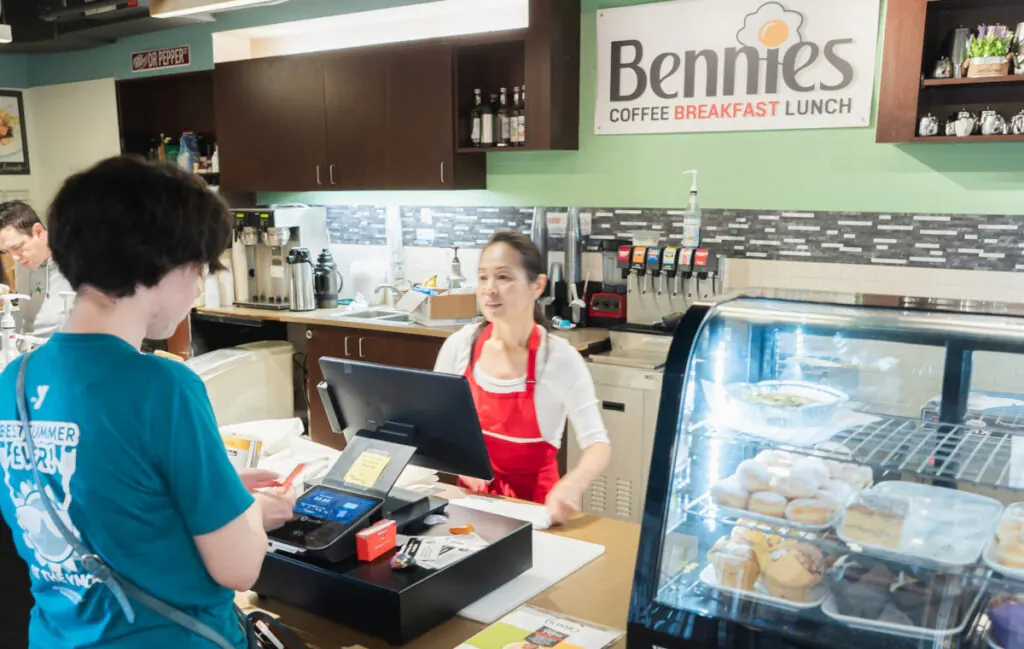
A cafe business plan is not a school exercise, and it is not a glossy document you write once and forget in a folder. If it is doing its job, it helps you make expensive decisions before they become expensive mistakes. It should tell you whether your idea has enough Cafe margin, enough demand, and enough operational discipline to survive the first year.
That matters more in cafes than many first-time owners expect. A cafe can look simple from the customer side. Good coffee, a pastry case, pleasant lighting, quick service. Behind the counter, it is a game of thin margins, labor timing, seat turnover, product waste, rent pressure, and relentless consistency. The owners who last are usually not the ones with the most romantic concept. They are the ones who can turn a concept into a workable model.
A strong plan does not need inflated language. It needs clear assumptions, honest math, and evidence that you understand how a cafe actually runs from opening to close.
Start with the real purpose of the plan
Before you write the first page, decide who the plan is for. The answer shapes everything.
If you are seeking a bank loan, the plan needs to reassure a cautious reader who cares deeply about repayment risk. That reader wants to see a sensible startup budget, realistic sales assumptions, and enough cash cushion to survive slow months. If you are raising money from private investors, they will still care about discipline, but they may spend more time looking at your concept strength, location logic, and growth potential. If the plan is mainly for you and your operating team, it should become a practical decision tool, something you can revisit when staffing costs rise or food sales lag behind projections.
The best cafe business plans can do all three, but they begin with a practical question: what decision should this document help someone make? Once you know that, the plan becomes easier to structure and much harder to fake.
Describe the cafe clearly enough that a stranger can picture it
One of the most common weaknesses in a business plan is vagueness. People write, “We will open a neighborhood cafe serving quality coffee and fresh food in a welcoming atmosphere.” That could describe thousands of places, including ones that failed.
A useful description is specific. Explain what kind of cafe you are building, who it is for, what problem it solves, and why customers will choose it regularly instead of once. A commuter-focused weekday coffee bar near a train station is a different business from an all-day brunch cafe in a walkable residential district. So is a small specialty coffee shop with limited seating and high average ticket prices. The service model, labor needs, menu mix, rent tolerance, and marketing approach all change with the concept.
Give the reader details they can test. If your cafe will open from 6:30 a.m. To 4:00 p.m., say that. If 70 percent of your expected sales will happen before 11:00 a.m., say that too. If your menu is built around espresso, batch brew, grab-and-go breakfast, and a tight pastry program sourced from a local bakery, spell it out. Precision builds trust.
It also reveals weak points. Many owners discover during this section that they are trying to combine too many models at once. A cafe that wants to be a laptop workspace, a premium brunch destination, a bakery, an evening wine bar, and a retail bean shop often ends up needing more space, more labor, more equipment, and more management skill than one small business can comfortably support at launch.
Location is not a paragraph, it is an argument
In a cafe business plan, the location section often deserves more attention than the mission statement. Foot traffic, parking, nearby employers, residential density, visibility, morning patterns, and neighboring businesses can shape sales more powerfully than branding.
Do not simply say the site is “high traffic.” What kind of traffic? People driving past at 40 miles per hour are not the same as office workers walking with ten minutes to spare. A corner with strong lunchtime flow may still be weak for a cafe if your business depends on early coffee runs. A charming side street may work brilliantly if it sits in a neighborhood with loyal residents and limited competition. Context matters.
If you have already identified a space, explain why it fits the model. Mention the square footage, approximate seating capacity, frontage, whether there is room for a queue without disrupting service, and whether the plumbing and electrical setup are likely to support your equipment list without a punishing buildout bill. In many cafe launches, the buildout is where the budget first goes off the rails. Old grease traps, insufficient power, poor ventilation, inaccessible restrooms, and drainage issues can add tens of thousands very quickly.
If you have not chosen a site yet, describe the criteria with discipline. State your target rent range as a percentage of projected revenue, your preferred neighborhood profile, and the non-negotiables. That shows you are not shopping emotionally.
Know your customer well enough to predict behavior
A useful customer profile is not just demographic. It is behavioral.
A downtown cafe might serve office staff, medical workers, students, nearby residents, and occasional tourists, but each group buys differently. Office workers may generate a sharp morning rush and demand speed. Students may stay longer, buy less per visit, and need different seating and power access. Parents with strollers care about aisle width and convenience. Weekend brunch customers tend to increase average ticket size but also create operational pressure if the kitchen is small.
Your plan should show that you understand when customers arrive, what they buy together, how frequently they return, and how much service time they require. A cafe with strong repeat business usually wins by becoming part of a routine. That could be a daily coffee stop, a weekly remote-work session, or a Saturday breakfast ritual. If you cannot imagine the pattern, the customer profile is still too abstract.
A short anecdotal view can help here. I have seen operators obsess over latte art and branded cups while overlooking a simpler truth: if their target customer has only six minutes between parking and clock-in, drink quality matters, but speed and line design matter just as much. A beautiful concept can lose to a less polished competitor that moves twenty people through the till before 8:30 a.m.
Competitive analysis should be fair, not dismissive
If your competitor section says nearby cafes are overpriced, inconsistent, or outdated, it raises Bennies Cafe Cafe suspicion. Local competitors stay in business for a reason. Your job is to understand what they do well, where there is room in the market, and what you can offer that is meaningfully different.
Sometimes the gap is product quality. Sometimes it is speed. Sometimes it is opening earlier than everyone else, offering reliable gluten-free food, or creating a calmer place for meetings in a district dominated by grab-and-go counters. Sometimes the opportunity is not to be better at everything, but to be more focused.
Be careful with the phrase “there is no competition.” If people are currently meeting their coffee and light meal needs through chain shops, bakeries, convenience stores, fast-casual spots, or office canteens, that is competition. A good plan acknowledges substitutes, not just direct peers.
The most credible competitive analysis shows trade-offs. Perhaps the nearest independent coffee shop has a strong brand and loyal customers but minimal food sales. Perhaps a chain nearby captures commuters with convenience, but the setting does not encourage longer visits or premium purchases. That is the kind of observation that leads to a better operating strategy.
Build the menu around margin, throughput, and waste
Many new cafe owners start with what they love to eat and drink. That is natural, but it is not enough. A workable menu reflects three things at once: what customers want, what your team can execute repeatedly, and what the business can afford.
In a cafe, menu complexity is expensive in hidden ways. It increases prep time, inventory counts, spoilage, training requirements, ordering errors, and the chance that service slows down at peak periods. A tightly edited menu is not a compromise. In many cases, it is a competitive advantage.
When you write this section of the business plan, explain the menu architecture, not just the items. Clarify which products drive volume, which products lift average transaction value, and which products create identity. Espresso drinks may attract traffic, but pastries and breakfast sandwiches can raise the ticket. Retail beans and bottled drinks may add useful margins with minimal labor. Seasonal specials can bring energy, but too many at once can strain execution.
Include pricing logic. If a cappuccino is priced at one level and a breakfast sandwich at another, show that those numbers were set with food cost, labor intensity, local market expectations, and sales mix in mind. A plan that assumes premium pricing without premium demand is fragile. On the other hand, underpricing to attract customers can quietly destroy the business. Plenty of cafe owners stay busy and still struggle because their gross margin never had enough room to carry labor, rent, and waste.
The operating model is where good ideas become believable
This is the section that separates dreamers from operators. A cafe plan needs to show how the day actually works.
Describe the hours, staffing pattern, production flow, ordering process, POS system, cleaning routines, inventory controls, and vendor relationships. If food is prepared on-site, explain what prep happens before opening and how you will handle peak demand without burying the line. If pastries come from an outside supplier, note the delivery schedule and how that affects freshness and waste.
You do not need to write a training manual, but you do need to prove that the operation has been thought through. A 35-seat cafe with espresso drinks, hot breakfast, online orders, and table clearing may need more labor coverage than the owner first assumes, especially during short rush windows. Labor is rarely steady through the day. You may be overstaffed at 2:30 p.m. And understaffed at 8:15 a.m. A credible plan reflects that unevenness.
One practical point many plans skip is ownership involvement. If you plan to work in the business full-time, say so and define your role. If you are hiring a general manager from day one, include that cost honestly. Many early plans look healthy only because they quietly assume unpaid owner labor. Lenders and experienced investors notice that quickly.
What lenders and investors usually look for
- Clear evidence that demand exists for this specific cafe in this specific location
- Startup costs that reflect reality, including buildout overruns and opening cash
- Financial projections tied to operating assumptions, not wishful sales growth
- An owner or management team with relevant experience, or a plan to fill that gap
- Enough working capital to survive a slower-than-expected ramp
That last point deserves emphasis. Cafes rarely open at full strength on day one. There is usually a ramp period while local awareness builds, staff settle into routines, and the menu gets adjusted. A plan that assumes instant stability is easy to spot and hard to trust.
Financial projections need to be earned
This is the heart of the business plan. It is also where unrealistic optimism does the most damage.
Your revenue forecast should come from assumptions the reader can follow. Start with customer count, average ticket, daypart patterns, seat turnover if relevant, and open days per month. A simple example works better than broad claims. If you expect 140 transactions on weekdays at an average ticket of $9 to $12, and lower volume on some afternoons, say so. If weekends are stronger because of brunch traffic, quantify the difference and explain why.
Then stress-test the numbers. What happens if average weekday transactions are 20 percent lower for the first six months? What if food sales underperform and beverage-heavy tickets pull the average down? What if staffing costs rise because your service times are slower than expected? Strong plans do not just present the happy case. They show awareness of downside risk.
Your expense forecast should include occupancy costs, payroll taxes, merchant fees, utilities, insurance, software subscriptions, repairs, linen or laundry if applicable, cleaning, waste removal, marketing, and smallwares replacement. Cafes burn through cups, lids, pitchers, knock boxes, filters, blender parts, and countless minor items that never make it into the opening-day photo but absolutely show up on the P&L.
Startup costs should be equally grounded. Espresso equipment, grinders, refrigeration, point-of-sale hardware, counters, seating, signage, permits, design fees, legal setup, and opening inventory all add up quickly. Depending on the market and the condition of the space, buildout costs for a cafe can vary enormously. If you are unsure, use ranges and note the variables rather than pretending to know what you do not know.
Cash flow matters at least as much as profitability. A cafe can look profitable on paper and still run into trouble if loan payments, payroll timing, or supplier terms create short-term pressure. Include monthly cash flow projections for the first year if possible. That is often more useful than annual summaries.
Marketing should match how cafe customers actually choose
Many cafe plans either ignore marketing or bury it under vague promises about social media. Neither helps much.
Most successful cafes grow through a mix of location visibility, repeat habits, local reputation, and light but consistent promotion. People do not usually discover a cafe the way they discover a software product. They notice signage, search nearby options, hear a recommendation, pass by during routine errands, or see food and drinks shared by local customers online.
So your marketing plan should be practical. Explain how people will hear about the opening, how you will encourage repeat visits, and how you will become known within a defined area. For some cafes, partnerships with nearby offices, schools, gyms, or residential buildings are more valuable than broad ad spend. For others, strong local search visibility and a smooth mobile ordering experience matter more.
Promotions deserve caution. Discounts can create trial, but they can also train customers to wait for deals. In most cafes, loyalty works better when it nudges frequency without undermining pricing. A free drink after a set number of purchases is one thing. Permanent underpricing is another.
The strongest marketing plans understand that the operation itself is marketing. Fast service, warm staff, clean restrooms, accurate orders, fresh pastry displays, and visible consistency do more for retention than clever captions ever will.
Your team section should answer one hard question
Why are you the right group to run this cafe?
That does not mean every founder needs ten years as a barista or executive chef. It does mean the plan must account for the actual skills required. Someone needs to understand beverage quality, labor scheduling, vendor management, food safety, bookkeeping, customer service standards, and local compliance. If those skills are spread across several people, make that clear. If there are gaps, acknowledge them and explain how you will close them.
Investors and lenders are often less concerned by an incomplete resume than by overconfidence. A first-time owner who says, in effect, “I know cafes are operationally demanding, and here is the experienced manager, consultant, or training partner who fills my blind spots,” sounds much safer than one who assumes passion alone will carry the business.
The best plans leave room for adjustment
A cafe business plan should be firm enough to guide decisions and flexible enough to survive contact with reality. You may discover that lunch underperforms, but morning bundle offers do very well. You may learn that customers want fewer menu items, not more. You may find that one seating layout creates bottlenecks and another improves throughput. Good operators adapt, but they adapt from a position of measurement.
That is why your plan should include a few key metrics you intend to watch from the start. Transaction count, average ticket, labor percentage, cost of goods sold, waste, and sales by daypart are usually more useful than vanity metrics. If those numbers move in the wrong direction, you need to know quickly.
This also helps with decision-making after launch. If a menu item has great gross margin but slows service during the morning rush, is it worth it? Sometimes yes, if it lifts ticket size enough. Sometimes no, if it clogs the queue and costs you beverage volume. A plan that already frames the business in terms of trade-offs gives you a better chance of making smart calls under pressure.
Mistakes that weaken a cafe business plan fast
- Confusing a pleasant concept with a financially workable business
- Underestimating buildout costs and opening working capital
- Assuming sales volume without tying it to traffic, ticket size, and service capacity
- Ignoring labor intensity, especially during short rush periods
- Writing projections that require everything to go right immediately
If you avoid those five, you are already ahead of many early drafts.
Write it so someone can say yes, or so you can say no
That may sound harsh, but it is one of the real uses of a business plan. A strong plan can help someone approve financing, commit capital, or sign a lease. Just as importantly, it can help you recognize when the numbers or operating conditions do not support the idea yet.
That is not failure. It is good management before money gets trapped in the wrong space, the wrong menu, or the wrong cost structure.
A cafe can become a durable, profitable business with loyal customers and real local presence. It can also become a demanding operation that looks lively from the dining room while losing money in the back office. The difference usually shows up long before opening day, in the quality of the planning.
Write your cafe business plan with enough honesty that it can challenge your idea, not just decorate it. Be specific about the customer, the location, the menu, the staffing, and the numbers. Show that you understand what drives sales, what erodes margin, and what the business will need to survive its first hard stretch. When the plan does that, it becomes far more than a document. It becomes a filter for better decisions, and that is what makes it work.
Bennies Cafe
17230 Jackson Creek Pkwy Ste 100, Monument, CO 80132
+1 719-445-0660
FAQ About Cafe
What is considered a café?
A café is generally an informal place to enjoy refreshments and a meal. Bennies Cafe in Monument serves breakfast and lunch in a counter-service setting, with options including eggs Benedict, sandwiches and crepes. Guests can eat in or arrange pickup.
What is the difference between a coffee shop and a café?
The terms often overlap. A coffee shop usually emphasizes coffee and other drinks, while a café may offer a broader food menu. Check the individual establishment's menu rather than relying on its name. Bennies Cafe offers coffee drinks alongside breakfast and lunch dishes.
What is the difference between café and coffee?
In everyday English, a café is a place where people buy food and drinks, while coffee is the beverage. The word café comes from the French word for coffee. Bennies Cafe serves options such as brewed coffee, espresso and lattes as part of its drinks menu.