How to Make Your Cafe More Accessible and Inclusive
A more accessible and inclusive cafe does not happen because a business installs one ramp, adds oat milk, and posts a welcome message on Instagram. It happens when the entire customer experience is examined from the pavement outside to the final payment at the till. It is practical work. It is also ongoing work.
For cafe owners, accessibility and inclusion are often discussed as values, but they are just as much operational disciplines. They affect traffic flow, staff training, menu design, customer loyalty, dwell time, local reputation, and risk. They also shape something harder to measure but easy to feel, whether people can relax in your space without having to ask for special treatment.
The strongest cafes understand this instinctively. They know that a mother maneuvering a pram, a regular with low vision, an older customer who needs a stable chair, a deaf customer ordering in a rush, a student with sensory sensitivities, and a wheelchair user meeting friends all notice the same thing. They notice whether the room was designed with real people in mind.
Accessibility starts before the front door
Many owners focus on the interior first, but customers start forming judgments before they step inside. The route from street to seat matters. If there is a steep threshold, a narrow entrance, heavy door, or outdoor sign blocking the approach, that can be enough to turn someone away. Often, nobody complains. They simply do not come back.
A useful exercise is to stand across the street and watch your entrance for twenty minutes. See how people approach. Notice whether someone using a mobility aid would have enough turning space. Check whether the door can be opened with one hand while holding a cane, a bag, or a child. If you have outdoor tables, be honest about whether they leave a clear path or force people into a tight squeeze.
Small fixes can produce outsized results. Repositioning a sandwich board, adding a doorbell for assistance, installing a slower door closer, or improving exterior lighting can change the experience immediately. If your lease or building age limits structural changes, clear communication becomes Cafe even more important. A short note on your website stating the width of the entry, whether there is a step, and what help is available is far better than vague reassurance.
Customers with access needs often plan in detail because uncertainty is tiring. A cafe that answers basic questions clearly earns trust before an order is ever placed.
The room has to work for more than one type of body
Inside the cafe, layout decisions reveal what the business actually prioritizes. A stylish but cramped room may photograph well and still exclude customers. Accessibility is not only about legal minimums. It is about whether people can move, sit, hear, read, and participate without unnecessary friction.
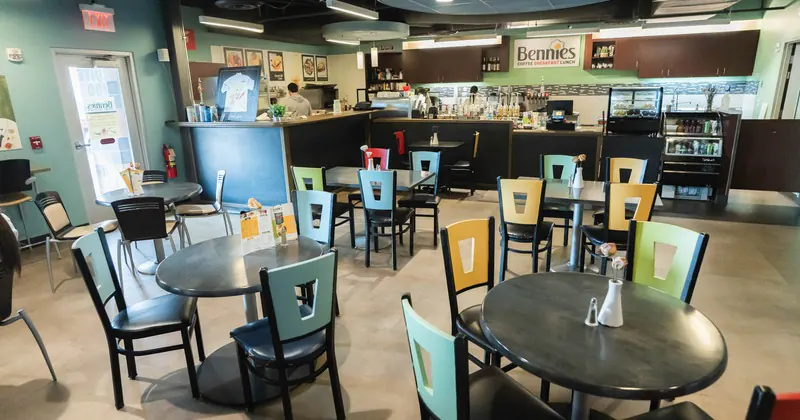
Circulation space is one of the most common failures. Chairs that look charming when tucked close together can create an obstacle course. If your floor plan only works when every table is filled to the edge, it is probably not working well enough. Customers using wheelchairs or walkers need room to turn and pass. So do staff carrying hot drinks. Spacious layouts improve safety and service speed for everyone.
Seating variety matters too. Fixed banquettes can be difficult for some people to enter or exit. Lightweight chairs can slide when someone tries to sit or stand. High stools exclude many customers, including people with balance issues, some disabled customers, and many older adults. A well-planned cafe usually benefits from offering a mix of standard-height tables, some seats with backs and arms, and at least a few options that are easy to access without squeezing through a narrow gap.
The counter is another common pinch point. If the ordering point is too high, if menus are mounted overhead in small type, or if pastry displays block sightlines, some customers are instantly disadvantaged. A lower section of counter is ideal, but even without construction work, staff can step out from behind the till, offer table ordering where feasible, or provide handheld menus in large print.
Accessible design rarely lowers the quality of a room. In practice, it usually makes the space calmer, more legible, and easier to use.
Inclusion is sensory, not just physical
Many cafe owners think about wheelchairs but overlook sensory accessibility. That is a mistake. Plenty of customers can physically enter a space and still find it exhausting or unusable because of lighting, noise, clutter, glare, scent, or information overload.
Music is a regular culprit. In a full room with grinders running, milk steaming, crockery clattering, and several conversations at once, even moderate background music can tip the space from lively to stressful. Some customers are hard of hearing and struggle to separate speech from ambient noise. Others are neurodivergent and find the cumulative sound deeply draining. The answer is not silence all day, but better judgment. Lower volume at peak times. Avoid speakers pointed directly at seating. Soft surfaces, curtains, wall panels, and upholstered elements can absorb sound without ruining the atmosphere.
Lighting deserves equal attention. Dim lighting can be cozy, but if menus become difficult to read and faces hard to interpret, it becomes a barrier. Very bright lighting can also cause discomfort, especially with glare from polished surfaces. Natural light helps, though it should be managed so customers are not staring into direct sun while trying to read a menu. If your cafe has a strong aesthetic built around low light, keep a few brighter seating areas and ensure staff can offer help discreetly.
Scent can be another hidden issue. Fresh coffee smells inviting to many people, but overpowering air fresheners, cleaning products, or heavily scented candles can trigger headaches or respiratory discomfort. The goal is not a sterile room. It is restraint.
A genuinely inclusive cafe asks a simple question: can a person with a different sensory profile remain here comfortably long enough to enjoy the experience?
Menus are communication tools, not design trophies
Some of the least accessible cafes have beautifully branded menus. Tiny type, low contrast, all caps, reflective surfaces, handwritten boards, and jargon-heavy descriptions may look distinctive, but they can frustrate customers quickly.
Readable menus use clear fonts, strong contrast, adequate spacing, and straightforward language. This does not require sacrificing personality. It requires remembering that the menu’s first job is to communicate. If a customer needs to ask a stranger to decipher every item, the design has failed.
Printed menus in large type are valuable, especially in cafes where the main menu is mounted behind the counter. Digital menus can help too, but only if they are easy to access and compatible with screen readers. A QR code should be an option, not the only route. Many customers do not want to use their phone just to order a flat white.
Food descriptions also matter. If something is spicy, say so. If a pastry contains nuts, list it clearly. If there are vegan, halal, gluten free, or dairy free options, identify them consistently and accurately. Staff should know what these labels mean and when not to improvise. Guessing about allergens or dietary needs is never acceptable.
One cafe operator I know made a modest change that improved service almost overnight. They replaced a single overhead menu board with smaller, clearer counter menus and a large-print version. Average ordering time dropped because customers spent less time squinting, asking repeated questions, and stepping aside to decide. Accessibility improved, and so did queue flow.
Staff behavior makes or breaks inclusion
A cafe can have excellent physical design and still make people feel unwelcome. Usually the problem is not hostility. It is uncertainty. Staff do not know how to offer help without patronizing, how to communicate with someone who is deaf or non-verbal, or how to respond when a customer has a request that falls outside routine service.
Training should be practical rather than theatrical. Staff do not need scripts full of corporate language. They need confidence, awareness, and a few habits they can rely on under pressure. The best teams learn to ask before assisting, speak to the customer rather than a companion, describe options clearly, and stay flexible when standard procedures do not fit.
A customer using a wheelchair may prefer to move a chair themselves rather than have a staff member grab furniture abruptly. A blind customer may want verbal orientation to the room, such as where the till, toilets, and available tables are located. A deaf customer may prefer eye contact and gestures rather than staff talking while turned away at the espresso machine. None of this is difficult, but it requires attention.
It also requires enough staffing. Accessibility often breaks down when the room is understaffed and everyone reverts to speed over care. If one person is taking orders, pulling shots, delivering food, and clearing tables, thoughtful service becomes harder. Inclusion has labor implications. Owners should acknowledge that openly.
A short training focus can cover most day-to-day situations:
- Ask, do not assume, what help is wanted.
- Speak clearly and directly to the customer.
- Know the menu, allergen information, and seating options well.
- Offer alternatives when a standard process creates a barrier.
- Treat access requests as normal service, not exceptions.
That kind of guidance is simple, but it changes the atmosphere. Customers can tell when staff are calm and competent.
Toilets tell the truth
Few areas expose a gap between brand values and reality faster than the toilet. A cafe may advertise itself as community-minded and welcoming, yet have a toilet up a narrow stair, a lock that is hard to grip, poor signage, no changing shelf, and no room to maneuver.
If you have an accessible toilet, check it regularly as a user would. Is it being used as storage? Can the door open fully? Is the alarm reachable? Are grab rails secure? Is the sink usable from a seated position? Are soap dispensers, hand dryers, and bins positioned sensibly? These details are not glamorous, but customers remember them.
If you do not have an accessible toilet and cannot add one because of structural limits, honesty matters again. Publish the information clearly online and train staff to explain the situation without defensiveness. Depending on location, it may also be worth building a relationship with a nearby venue that offers accessible facilities and agreeing on a referral arrangement. This is not a perfect substitute, but it is better than leaving customers to discover the limitation after ordering.
For some parents and carers, inclusion also means practical support such as nappy changing space, room for prams, or a safe place to settle a child. These features are not separate from accessibility. They intersect with it.
Price, policy, and social comfort matter too
Inclusion is not only about disability access. A cafe can be physically accessible and socially exclusive. That often shows up in pricing, policy, and atmosphere.
If every table is protected by a laptop-only culture, if there is no place for teens to gather without being treated suspiciously, if staff are uneasy around people with support workers, or if customers feel judged for ordering the cheapest item and staying a while, the room narrows socially even if it remains open architecturally.
This does not mean a cafe must be all things to all people. Boundaries are reasonable. Time limits during rush periods, policies on abusive behavior, and decisions about table turnover are part of operating a viable business. The key is consistency and clarity. Policies should solve real operational problems, not target certain groups indirectly.
The same principle applies to pricing. No independent cafe can survive by undercharging, but there are ways to broaden who feels comfortable coming in. Some venues do this with smaller portion options, free tap water offered without fuss, a few lower-cost staples, or community events outside peak hours. These are commercial choices as much as ethical ones. A broader customer base is often more resilient than a narrow one.
Gender inclusion also deserves attention. If you have single-occupancy toilets, gender-neutral signage is usually a straightforward improvement. Staff should not make assumptions about names, pronouns, or relationships. Basic respect lowers social friction more effectively than any poster on the wall.
Digital accessibility influences the in-store experience
For many customers, the first visit to a cafe happens online. They check your hours, menu, location, step-free access, toilet situation, Wi-Fi, dog policy, booking process, and whether there is space for a buggy or wheelchair. If the website is cluttered, your Google listing is outdated, and Instagram is the only source of useful information, some people will give up.
At minimum, your digital presence should answer the most common practical questions in plain language. Include whether there is a step at the entrance, whether staff can assist, whether there is accessible seating and a toilet, and whether quieter times tend to exist during the day. If you take reservations, make the process usable without forcing a phone call on someone who may not be able to make one comfortably.
Alt text on images, readable web contrast, and sensible link labels matter more than many owners realize. So does responding well to direct messages or emails about access. A thoughtful reply can convert uncertainty into loyalty.
I have seen customers become regulars because a cafe answered one question carefully: “Can I get in easily with a power chair, and is there a table where I will not block the route?” That level of specificity may seem minor from behind the counter. To the customer, it can determine whether the outing feels possible at all.
Where to start if your budget is tight
Not every cafe can afford renovations. Buildings are old, margins are thin, landlords are slow, and listed property restrictions are real. The good news is that many improvements are inexpensive. What matters first is not perfection. It is momentum and honesty.
If the budget is limited, start with the fixes that reduce friction fastest:
- clear exterior and interior pathways
- readable menus in multiple formats
- lower music volume and better lighting balance
- staff training on assistance and communication
- accurate access information online
These changes do not solve every barrier, but they move the cafe in the right direction. They also generate feedback you can use when planning larger investments. Once staff begin noticing access issues and customers start commenting positively, priorities become easier to set.
When a renovation does become possible, avoid treating accessibility as a late-stage compliance box. Bring it into the design brief at the beginning. Retrofitting is usually more expensive than planning well from the outset.
Testing your cafe with fresh eyes
Owners and managers can become blind to patterns in a room they know too well. The table that always juts out near the till, the glare at 3 p.m., the awkward toilet latch, the confusing queue line, the draft that slams the accessible door, all of it fades into the background for people who work there daily.
A practical way to counter that is to audit the space with actual users, not just a tape measure. Invite honest feedback from disabled customers, parents, older regulars, and staff members who notice bottlenecks. If possible, compensate external reviewers for their time. Their experience is expertise.
You can also observe ordinary service with a sharper lens. Watch how many customers need to ask for repeated clarification. Notice who hesitates at the entrance. Track whether certain tables remain empty because they are hard to reach. Pay attention to how often staff leave the counter to solve predictable barriers. These are operational signals.
Some owners resist this process because they fear a long list of flaws. In practice, most audits reveal a mix of easy wins, medium-term improvements, and a handful of difficult structural issues. That is manageable. What matters is building a habit of revision.
Inclusion should be visible, but not performative
Customers appreciate cues that a cafe has thought about access. A note on the website, a sign saying staff are happy to read the menu aloud, a large-print menu at the counter, or a calm response to accommodation requests all help. The trap is turning inclusion into branding theatre.
If you advertise accessibility loudly and then fail at basics, disappointment sharpens quickly. It is better to state specific facts than to make sweeping claims. “Step-free side entrance, large-print menus available, quieter mornings on weekdays, staff can assist with table service on request” is useful. “Everyone welcome” is pleasant but vague.
There is also value in normalizing accommodation. If someone asks to move to a quieter corner, needs a straw, requests ingredient details, or wants a chair removed from a table, that should feel routine. The less fuss attached to access, the more genuinely inclusive the space becomes.
The business case is real, but it is not the whole point
Owners sometimes ask whether accessibility improvements “pay off.” Often, yes. Better layouts can increase comfort and repeat visits. Clearer menus can speed ordering. Improved acoustics can lengthen stays and raise secondary purchases. Better online information can reduce abandoned visits. Loyal customers who feel respected tend to recommend places strongly.
Still, reducing inclusion to revenue misses something important. Cafes are public-facing social spaces. They shape daily life in neighborhoods. They host first meetings, solo breaks, family catch-ups, working mornings, and post-school treats. Exclusion in a cafe is not merely a commercial inconvenience. It is a signal about who gets to participate comfortably in public life.
That is why the best accessibility work in hospitality tends to feel unshowy. It lives in thoughtful spacing, readable words, practiced service, and a room arranged so people can belong without asking permission.
A more accessible cafe does not need to look clinical, expensive, or stripped of character. It can still be busy, stylish, local, and full of personality. It simply needs to be designed and run with a wider range of human realities in mind. When that happens, inclusion stops feeling like an add-on. It becomes part of the cafe’s craft.
Bennies Cafe
17230 Jackson Creek Pkwy Ste 100, Monument, CO 80132
+1 719-445-0660
FAQ About Cafe
What is considered a café?
A café is generally an informal place to enjoy refreshments and a meal. Bennies Cafe in Monument serves breakfast and lunch in a counter-service setting, with options including eggs Benedict, sandwiches and crepes. Guests can eat in or arrange pickup.
What is the difference between a coffee shop and a café?
The terms often overlap. A coffee shop usually emphasizes coffee and other drinks, while a café may offer a broader food menu. Check the individual establishment's menu rather than relying on its name. Bennies Cafe offers coffee drinks alongside breakfast and lunch dishes.
What is the difference between café and coffee?
In everyday English, a café is a place where people buy food and drinks, while coffee is the beverage. The word café comes from the French word for coffee. Bennies Cafe serves options such as brewed coffee, espresso and lattes as part of its drinks menu.